
Kategorien
Neuer Blog
Wie berechnet man den erforderlichen Luftstrom für Kühlgeräte?
February 04 , 2026Da die Leistungsdichte elektronischer Geräte stetig zunimmt, ist ein effektives Wärmemanagement zu einem entscheidenden Faktor für Leistungsstabilität und langfristige Zuverlässigkeit geworden. Einer der grundlegendsten, aber häufig missverstandenen Aspekte des Wärmemanagements ist die Berechnung des erforderlichen Luftstroms zur Kühlung der Geräte. Ohne eine genaue Luftstromberechnung kann selbst ein hochwertiger Lüfter oder Kühlkörper die erwartete Kühlleistung nicht erbringen.
Dieser Artikel erklärt, wie der erforderliche Luftstrom anhand der Wärmeabfuhr, der Temperaturanstiegsgrenzen und der Systembedingungen berechnet wird. Er behandelt außerdem häufige Konstruktionsfehler und den Einfluss der Lüfterauswahl auf die Kühlleistung im praktischen Einsatz. Die hier beschriebenen Prinzipien sind breit anwendbar auf Industrieanlagen, Netzteile, Kommunikationsgeräte und Schaltschränke.
Verständnis der Wärmeerzeugung in Kühlgeräten
Jedes elektronische System erzeugt Wärme als Nebenprodukt des Stromverbrauchs. Zu den Wärmequellen gehören Prozessoren, Leistungsmodule, Motortreiber und Wandlerschaltungen. Die gesamte Wärmelast wird üblicherweise in Watt angegeben und stellt die Wärmemenge dar, die abgeführt werden muss, um sichere Betriebstemperaturen zu gewährleisten.
Eine genaue Wärmebedarfsberechnung ist der erste Schritt bei der Luftmengenberechnung. Dieser Wert kann aus Datenblättern der Komponenten, Wirkungsgradberechnungen oder direkten Messungen ermittelt werden. Eine Unterschätzung der Wärmelast führt häufig zu unzureichendem Luftdurchsatz, während eine Überschätzung unnötige Geräusche und einen erhöhten Energieverbrauch zur Folge hat.
Zusammenhang zwischen Luftstrom und Wärmeabfuhr
Luftströmung führt Wärme ab, indem sie thermische Energie von wärmeerzeugenden Bauteilen abtransportiert. Die Wärmemenge, die die Luft abführen kann, hängt von drei Hauptfaktoren ab:
1. Luftvolumenstrom
2. Luftdichte und spezifische Wärmekapazität
3. Zulässiger Temperaturanstieg der Luft
4. Die grundlegende thermische Beziehung kann wie folgt ausgedrückt werden:
5. Wärmeabfuhr entspricht dem Massenluftstrom multipliziert mit der spezifischen Wärmekapazität der Luft und dem Temperaturanstieg
In praktischen technischen Anwendungen wird diese Beziehung zu einer gängigen Formel zur Luftmengenberechnung auf Basis des Volumenstroms vereinfacht. Diese Formel bildet die Grundlage für die Auswahl des richtigen Kühlventilator .
Berechnungsmethode für den Luftstrom
Um den erforderlichen Luftstrom zu berechnen, müssen drei Parameter definiert werden:
1. Gesamte Wärmeabgabe des Systems
2. Maximal zulässiger Anstieg der Lufttemperatur
3. Umgebungsbedingungen
4. Für Standardluft bei normalem Druck wird häufig eine vereinfachte technische Formel verwendet
Der erforderliche Luftstrom entspricht der Wärmelast geteilt durch den zulässigen Temperaturanstieg multipliziert mit einer Konstanten.
Diese Konstante berücksichtigt die thermischen Eigenschaften der Luft und Umrechnungsfaktoren. Das Ergebnis wird üblicherweise in Kubikfuß pro Minute oder Kubikmeter pro Stunde angegeben. Ein geringerer zulässiger Temperaturanstieg erfordert einen höheren Luftdurchsatz, während eine höhere Temperaturtoleranz den Luftdurchsatzbedarf reduziert.
Wahl eines angemessenen Temperaturanstiegs
Der Temperaturanstieg bezeichnet die Differenz zwischen der Einlass- und der Auslasslufttemperatur. Bei der Wahl dieses Wertes muss ein Gleichgewicht zwischen thermischer Sicherheit und Systemeffizienz gefunden werden. Typische Werte für den Temperaturanstieg liegen je nach Anwendungsfall zwischen fünf und fünfzehn Grad Celsius.
Hochzuverlässige Anlagen verwenden oft niedrigere Temperaturanstiegsgrenzen, um die Belastung und Alterung der Komponenten zu reduzieren. Industrielle Systeme mit robusten Komponenten tolerieren unter Umständen einen höheren Temperaturanstieg, um die Lüftergröße und den Stromverbrauch zu verringern.
Einfluss des Systemwiderstands auf den tatsächlichen Luftstrom
Der berechnete Luftstrom entspricht dem theoretischen Bedarf, nicht dem tatsächlich vom Lüfter gelieferten Luftstrom. Der Systemwiderstand, verursacht durch Kühlkörper, Filter, Gitter und die Gehäusegeometrie, beeinflusst den realen Luftstrom erheblich.
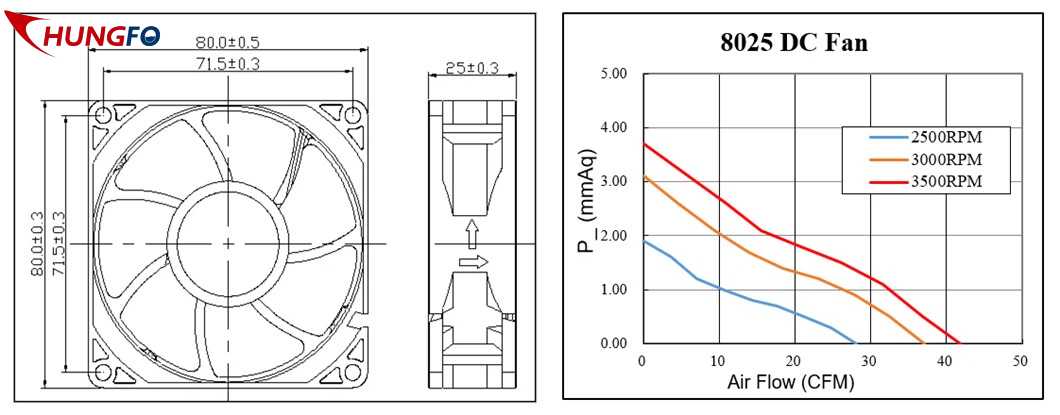
Mit steigendem Widerstand sinkt der Luftstrom gemäß der Lüfterkennlinie. Daher muss die Luftstromberechnung mit einer Abschätzung der Systemimpedanz kombiniert werden. Auswahl eines Gleichstromlüfter Die alleinige Verwendung von Freiluft-Luftstromwerten führt unter Betriebsbedingungen häufig zu unzureichender Kühlung
Lüfterauswahl basierend auf Luftstromberechnung
Sobald der erforderliche Luftstrom berechnet ist, sollte die Lüfterauswahl sowohl auf den Anforderungen an den Luftstrom als auch an den statischen Druck basieren. Ein Lüfter muss in der Lage sein, den berechneten Luftstrom am Betriebsdruckpunkt des Systems zu liefern.
Hersteller wie China Chungfo bieten Leistungskennlinien an, anhand derer Ingenieure die Luftstromanforderungen mit den realen Betriebsbedingungen abgleichen können. Die richtige Lüfterauswahl gewährleistet, dass der berechnete Luftstrom auch eine effektive Kühlleistung erzielt.
Häufige Fehler bei der Luftstromberechnung
1. Bei der Konstruktion von Kühlsystemen treten häufig mehrere Fehler auf.
2. Luftstromverluste aufgrund von Hindernissen ignorieren
3. Maximalen Lüfterluftstrom anstelle des Betriebsluftstroms verwenden
4. Annahme einer gleichmäßigen Luftverteilung innerhalb von Gehäusen
5. Vernachlässigung von Höhen- und Umgebungstemperatureffekten
Durch die Vermeidung dieser Fehler wird die Kühlgenauigkeit verbessert und das Risiko von Überhitzung oder übermäßiger Lüftergeräuschentwicklung verringert.
Integration der Luftstromberechnung in die thermische Auslegung
Die Berechnung des Luftstroms darf nicht isoliert betrachtet werden. Sie muss in die gesamte thermische Auslegung integriert werden, einschließlich der Anordnung der Kühlkörper, der Luftstromwege, der Gehäusekonstruktion und der Wartungsaspekte. Eine frühzeitige Planung des Luftstroms reduziert die Kosten für Nachbesserungen und verbessert die Produktzuverlässigkeit.
Erfahrene Hersteller wie China Chungfo Lüfterherstellung Schwerpunkt auf der thermischen Abstimmung auf Systemebene anstatt auf der Auswahl einzelner Lüfter. Dieser Ansatz gewährleistet eine stabile Kühlleistung während des gesamten Produktlebenszyklus
Schlussfolgerung
Die Berechnung des erforderlichen Luftstroms für Kühlgeräte ist eine grundlegende Fähigkeit in der Thermodynamik. Durch das Verständnis der Wärmeerzeugung, der Luftströmungsprinzipien und des Systemwiderstands können Ingenieure Kühllösungen entwickeln, die effizient, zuverlässig und kostengünstig sind
Eine präzise Luftstromberechnung in Verbindung mit der richtigen Lüfterauswahl gewährleistet, dass Kühlgeräte unter realen Bedingungen innerhalb sicherer Temperaturgrenzen arbeiten. Dieser systematische Ansatz ist unerlässlich für moderne elektronische Systeme, die zunehmenden thermischen Belastungen ausgesetzt sind.
Stichworte :