Kategorien
Neuer Blog
Was verursacht ein Ungleichgewicht des Laufrads bei der Reparatur und routinemäßigen Wartung von Zentrifugalventilatoren?
July 27 , 2026Kreiselventilatoren gehören zu den am weitesten verbreiteten Luftfördergeräten in der modernen Industrie. Von HLK-Systemen und Kühlanlagen bis hin zu medizinischen Geräten, industrieller Automatisierung, Kommunikationsschränken, Ladestationen für Elektrofahrzeuge und intelligenten Fertigungssystemen liefern Kreiselventilatoren den erforderlichen Luftstrom, um stabile Betriebstemperaturen aufrechtzuerhalten und eine zuverlässige Geräteleistung sicherzustellen.
Da industrielle Geräte zunehmend kompakter und leistungsstärker werden, steigen die Anforderungen an das Wärmemanagement weiter an. Hersteller verlangen Gebläseventilatoren, die nicht nur einen höheren Luftstrom und statischen Druck liefern, sondern auch geringe Vibrationen, niedrige Geräuschpegel und eine lange Lebensdauer gewährleisten. Unter diesen Bedingungen kann ein scheinbar geringfügiges Problem erhebliche Auswirkungen auf die Gesamtsystemzuverlässigkeit haben: das Ungleichgewicht des Laufrads.
Bei routinemäßigen Wartungs- oder Reparaturarbeiten stellen Wartungstechniker häufig ungewöhnliche Vibrationen, übermäßige Geräusche, erhöhte Motortemperaturen oder vorzeitigen Lagerverschleiß fest. Obwohl diese Symptome zunächst unabhängig voneinander erscheinen können, entstehen viele davon durch ein unausgeglichenes Laufrad.
Ein Laufrad-Ungleichgewicht ist nicht einfach nur ein Wartungsproblem. Es beeinflusst den Energieverbrauch, die Luftstromeffizienz, die Lebensdauer der Ausrüstung, die Wartungskosten und sogar die Arbeitssicherheit. Ein Ventilator, der mit einem unausgeglichenen Laufrad arbeitetverbraucht mehr Energie, belastet Lager und Wellen zusätzlich, erzeugt unnötige Vibrationen und erhöht die Wahrscheinlichkeit unerwarteter Abschaltungen.
Glücklicherweise sind die meisten Ursachen für ein Laufrad-Ungleichgewicht vermeidbar. Durch das Verständnis, wie Ungleichgewichte entstehen, das Erkennen früher Warnzeichen und die Umsetzung geeigneter Wartungsverfahren können Techniker die Lebensdauer von Kreiselventilatoren erheblich verlängern und gleichzeitig Wartungskosten reduzieren.
Dieser umfassende Leitfaden erklärt die wichtigsten Ursachen für Laufrad-Ungleichgewichte, wie professionelle Hersteller diese Risiken während der Produktion minimieren und warum die Auswahl hochwertiger Produkte von erfahrenen Herstellern wie Chungfo Fan eine effektive langfristige Investition ist.
Warum die Laufradauswuchtung wichtig ist
Ein Laufrad ist das Herzstück jedes Kreiselventilators. Während es sich mit hoher Geschwindigkeit dreht, beschleunigen seine Schaufeln die Luft durch die Zentrifugalkraft nach außen und erzeugen Luftstrom und statischen Druck.
Damit dieser Prozess gleichmäßig und effizient bleibt, muss der Schwerpunkt des Laufrads exakt mit seiner Rotationsachse übereinstimmen.
Selbst ein sehr geringer Gewichtsunterschied zwischen den Schaufeln kann eine beträchtliche Zentrifugalkraft erzeugen, sobald sich das Laufrad zu drehen beginnt.
Beispielsweise erfährt ein mit 4.000 U/min rotierendes Laufrad jede Minute Tausende von Beschleunigungszyklen. Wenn sich nur wenige Gramm Material auf einer Seite ansammeln, kann die daraus entstehende Zentrifugalkraft ein Vielfaches des tatsächlichen Gewichts der Ablagerung betragen.
Diese Kraft wird direkt auf die Motorwelle, Lager, das Gehäuse und die Befestigungsstruktur übertragen.
Die Folgen sind erhöhte Vibrationen im gesamten Gerät, schnellerer Lagerverschleiß, Wellendurchbiegung, lockere Befestigungsschrauben, höhere Betriebstemperaturen, erhöhter Motorstrom, übermäßige Geräusche, verringerte Luftstromeffizienz, kürzere Gerätelebensdauer und höhere Wartungskosten.
Für Geräte, die kontinuierlich in Fabriken, Krankenhäusern, Rechenzentren, Kühlsystemen oder Verkehrsinfrastrukturen betrieben werden, ist die Aufrechterhaltung einer korrekten Laufradauswuchtung entscheidend, um einen stabilen Betrieb zu gewährleisten und unerwartete Ausfallzeiten zu minimieren.
Wie wird ein Laufrad unausgeglichen?
Viele Menschen gehen davon aus, dass ein Laufrad-Ungleichgewicht nur entsteht, wenn eine Schaufel bricht oder sichtbare Schäden aufweist. Tatsächlich entwickelt sich ein Ungleichgewicht normalerweise schrittweise.
Jedes rotierende Objekt besitzt einen Massenschwerpunkt. Während der Herstellung konstruieren Ingenieure das Laufrad sorgfältig so, dass dieser Schwerpunkt exakt mit der Wellenachse ausgerichtet ist.
Mit der Zeit können jedoch mehrere Faktoren die ursprüngliche Gewichtsverteilung verändern.
Staub sammelt sich auf einer Schaufel an.
Korrosion entfernt Material von einer anderen.
Wartungspersonal schleift Rost ab.
Eine geringfügige Einwirkung verbiegt einen Abschnitt.
Eine lockere Nabe verschiebt sich leicht auf der Welle.
Obwohl jede Veränderung unbedeutend erscheinen kann, verschieben sie zusammen den Schwerpunkt weg von der Rotationsachse.
Sobald dies geschieht, zieht die Zentrifugalkraft während der Rotation kontinuierlich die schwerere Seite nach außen.
Im Gegensatz zu statischen Objekten verstärken rotierende Komponenten diese Kräfte bei steigender Geschwindigkeit erheblich.
Deshalb erfordern Hochgeschwindigkeits-Kreiselventilatoren eine wesentlich präzisere Auswuchtung als langsam laufende Industrieanlagen.
Professionelle Hersteller führen daher dynamische Auswuchtungstests durch, anstatt sich ausschließlich auf eine Sichtprüfung zu verlassen.
Statische Auswuchtung und dynamische Auswuchtung
Das Verständnis des Unterschieds zwischen statischer und dynamischer Auswuchtung ist sowohl für Wartungspersonal als auch für Geräteentwickler wichtig.
Die statische Auswuchtung misst, ob das Laufrad im Stillstand ausgewuchtet bleibt.
Ein Laufrad kann perfekt ausgewuchtet erscheinen, wenn es auf reibungsarmen Auflagen ruht.
Sobald es jedoch mit mehreren tausend Umdrehungen pro Minute betrieben wird, erzeugen aerodynamische Kräfte, Wellenflexibilität und Fertigungstoleranzen zusätzliche dynamische Kräfte.
Die dynamische Auswuchtung misst die Vibrationen, während sich das Laufrad mit Betriebsgeschwindigkeit dreht.
Internationale Normen wie ISO 1940 definieren akzeptable Auswuchtgüten entsprechend dem Gerätetyp und den Betriebsbedingungen.
Anwendungen mit höherer Präzision erfordern engere Auswuchttoleranzen.
Medizinische Geräte, Laborinstrumente, Anlagen zur Halbleiterfertigung und präzise Automatisierungssysteme erfordern typischerweise strengere Auswuchtgüten als allgemeine Lüftungssysteme.
Dies erklärt, warum professionelle Hersteller von Gebläseventilatoren während der gesamten Produktion erheblich in Präzisionsauswuchtgeräte investieren.
Die zehn häufigsten Ursachen für ein Laufrad-Ungleichgewicht
1. Ansammlung von Staub und Schmutz
Die häufigste Ursache für eine Unwucht des Laufrads ist eine ungleichmäßige Verschmutzung.
Während des Betriebs haften luftgetragener Staub, Fasern, Fett, Rauch und mikroskopische Partikel allmählich an den Schaufeloberflächen an.
Da die Luftstrommuster über das Laufrad hinweg variieren, sammelt sich die Verschmutzung selten gleichmäßig an.
Schließlich wird eine Seite schwerer als die gegenüberliegende Seite.
Industrien, die Holz, Papier, Mehl, Textilien, Zement, Kunststoffe, Chemikalien oder Metallpulver verarbeiten, sind häufig mit diesem Problem konfrontiert.
Selbst elektronische Kühlsysteme, die in staubigen industriellen Steuerschränken installiert sind, können nach längerem Betrieb ausreichend Verschmutzungen ansammeln.
Regelmäßige Reinigung ist daher eine der einfachsten und wirksamsten Maßnahmen zur vorbeugenden Wartung.
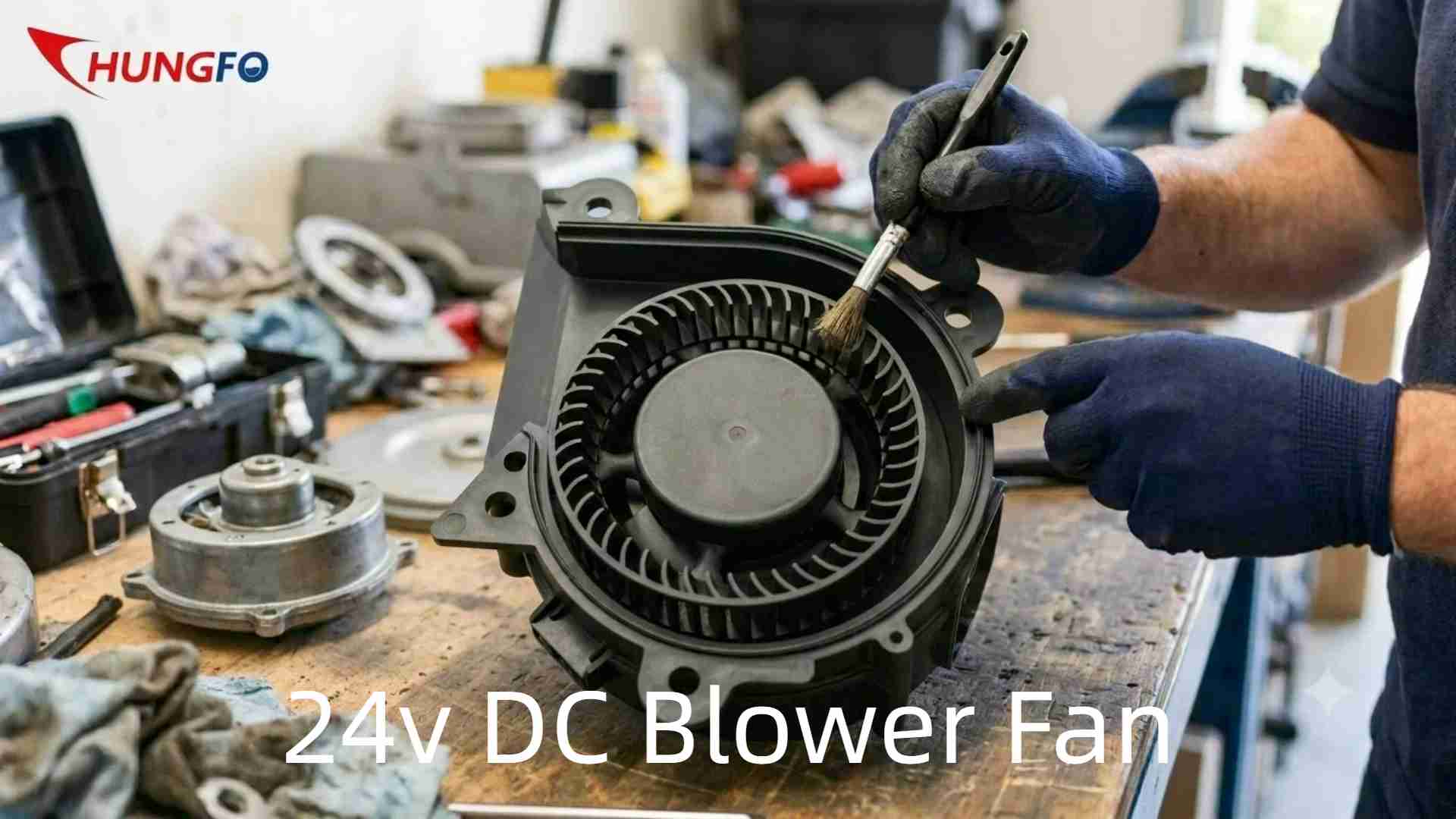
Wartungspersonal sollte Laufräder regelmäßig überprüfen und Ablagerungen mit zugelassenen nicht abrasiven Reinigungsmethoden entfernen, die die Schaufeloberflächen nicht beschädigen.
2. Korrosion und Oberflächenerosion
Umgebungsbedingungen tragen ebenfalls erheblich zur Unwucht des Laufrads bei.
Anlagen in Küstengebieten setzen Lüftungsgeräte häufig salzhaltiger Luft aus.
Chemische Anlagen können korrosive Gase freisetzen.
Industrielle Abluftsysteme transportieren manchmal saure oder alkalische Partikel.
Diese Verunreinigungen greifen die Oberflächen des Laufrads allmählich an.
Im Gegensatz zu gleichmäßiger Korrosion entfernt örtlich begrenzte Korrosion Material ungleichmäßig.
Ebenso erodieren abrasive Partikel, die in Hochgeschwindigkeitsluftströmen mitgeführt werden, kontinuierlich bestimmte Schaufelbereiche.
Da Material an einer Stelle verschwindet, während es an anderer Stelle intakt bleibt, verändert sich das ursprüngliche Gleichgewicht.
Die Auswahl korrosionsbeständiger Materialien, das Aufbringen von Schutzbeschichtungen und die Durchführung regelmäßiger Inspektionen können dieses Risiko erheblich verringern.
Hersteller, die Ventilatoren für raue industrielle Umgebungen produzieren, verwenden häufig verstärkte technische Kunststoffe, Aluminiumlegierungen, Edelstahl oder speziell behandelte Metallkomponenten, um die Korrosionsbeständigkeit zu verbessern.
3. Unsachgemäße Reinigung während der Wartung
Die Reinigung eines Laufrads mag einfach erscheinen, aber unsachgemäße Reinigungstechniken führen häufig zu einer neuen Unwucht.
Einige Techniker verwenden Stahlbürsten, Schleifscheiben oder aggressive Schabwerkzeuge, um verhärtete Verschmutzungen zu entfernen.
Obwohl der Schmutz verschwindet, werden auch kleine Mengen an Schaufelmaterial entfernt.
Da Wartungspersonal selten identische Mengen von jeder Schaufel entfernt, wird das Laufrad ungleichmäßig.
Chemische Reinigungsmittel, die Kunststoff- oder Aluminiumoberflächen angreifen, können ähnliche Ergebnisse verursachen.
Professionelle Wartungsrichtlinien empfehlen weiche Bürsten, Druckluft oder zugelassene Reinigungslösungen, die speziell für Ventilatorkomponenten entwickelt wurden.
Das Ziel ist, Verschmutzungen zu entfernen, ohne die Schaufelgeometrie oder Materialdicke zu verändern.
4. Schaufelverformung durch mechanische Einwirkung
Laufräder erleiden gelegentlich unbeabsichtigte Schäden während Transport, Installation oder Wartung.
Ein heruntergefallenes Werkzeug, unsachgemäße Lagerung oder eine versehentliche Kollision mit umliegenden Geräten kann eine Schaufel leicht verbiegen.
Obwohl die Verformung nur Bruchteile eines Millimeters betragen kann, verstärkt die hohe Drehzahl ihre Auswirkungen.
Verbogene Schaufeln verändern nicht nur die Gewichtsverteilung, sondern stören auch die Luftstrommuster.
Diese Kombination erzeugt sowohl mechanische Vibrationen als auch aerodynamische Geräusche.
Der Versuch, beschädigte Schaufeln ohne präzise Messung manuell zu richten, stellt das ursprüngliche Gleichgewicht nur selten wieder her.
In den meisten Fällen sollten stark verformte Laufräder entweder nach der Reparatur professionell dynamisch ausgewuchtet oder vollständig ersetzt werden.
5. Lose Nabe oder Befestigungskomponenten
Nicht jede Unwucht hat ihren Ursprung im Laufrad selbst.
Lose Naben, Wellenadapter, Sicherungsringe oder Befestigungsschrauben ermöglichen eine leichte Bewegung zwischen rotierenden Komponenten.
Anfangs kann diese Bewegung nahezu unmöglich zu erkennen sein.
Mit zunehmenden Rotationskräften werden mikroskopische Verschiebungen jedoch größer.
Das Ergebnis ähnelt einer Unwucht des Laufrads, obwohl die Schaufeln unbeschädigt bleiben.
Die routinemäßige Wartung sollte daher die Drehmomentprüfung aller Befestigungselemente gemäß den Herstellerspezifikationen umfassen.
Viele unerwartete Vibrationsprobleme verschwinden nach der Korrektur loser mechanischer Verbindungen, anstatt das Laufrad selbst auszutauschen.
6. Lagerverschleiß und Wellenbewegung
Ein Lagerausfall wird häufig mit einer Laufradunwucht verwechselt, da beide ähnliche Symptome verursachen, darunter übermäßige Vibrationen und ungewöhnliche Geräusche. Tatsächlich können verschlissene Lager auch eine der Hauptursachen für eine Laufradunwucht sein.
Mit zunehmendem Alter der Lager vergrößern sich die inneren Spiele allmählich. Die Welle dreht sich nicht mehr präzise um ihre ursprüngliche Mittellinie. Stattdessen beginnt sie, sich leicht in radialer und axialer Richtung zu bewegen. Obwohl das Laufrad selbst perfekt ausgewuchtet sein kann, verhält sich die rotierende Baugruppe so, als wäre sie unwuchtig, weil sich das Rotationszentrum verschoben hat.
Dieses Phänomen wird mit steigender Drehzahl zunehmend schwerwiegend. Ein Zentrifugalventilator, der kontinuierlich mit 4.000 bis 6.000 U/min betrieben wird, kann schnell Vibrationswerte entwickeln, die akzeptable Standards überschreiten, sobald der Lagerverschleiß fortschreitet.
Regelmäßige Schmierung, periodische Schwingungsanalysen und geplante Lagerwechsel gehören zu den wirksamsten Maßnahmen der vorbeugenden Wartung. Wartungsingenieure sollten niemals annehmen, dass der alleinige Austausch des Laufrads Vibrationsprobleme beseitigt, ohne zuvor die Lager zu überprüfen.
7. Fehlausrichtung der Motorwelle
Eine weitere häufig übersehene Ursache für Unwucht ist eine fehlerhafte Wellenausrichtung.
Nach dem Austausch eines Motors oder der Durchführung größerer Reparaturen bauen Techniker Komponenten manchmal wieder ein, ohne die Konzentrizität zwischen der Motorwelle und der Laufradnabe zu überprüfen. Selbst eine geringfügige Winkel- oder Parallelfehlausrichtung kann während des Betriebs zyklische Vibrationen erzeugen.
Moderne Fabriken verwenden zunehmend Laserausrichtungsgeräte, da herkömmliche Linealmethoden nicht die für schnelllaufende rotierende Maschinen erforderliche Genauigkeit bieten können.
Eine schlechte Wellenausrichtung erhöht die Lagerbelastung, beschleunigt den Dichtungsverschleiß, verringert die Motoreffizienz und verkürzt die Lebensdauer der gesamten Ventilatorbaugruppe.
Bei kritischen Industrieanlagen sollte die Überprüfung der Ausrichtung immer Bestandteil der abschließenden Wartungsinspektion sein.
8. Unsachgemäße Schweiß- oder Reparaturverfahren
Notfallreparaturen erfordern gelegentlich, dass beschädigte Laufräder geschweißt oder verstärkt werden.
Obwohl Schweißen die strukturelle Festigkeit wiederherstellen kann, verändert es nahezu immer die Gewichtsverteilung der rotierenden Baugruppe.
Zusätzliches Schweißmaterial erhöht die Masse eines Abschnitts, während lokale Erwärmung auch die Schaufelgeometrie verformen kann.
Ohne professionelles dynamisches Auswuchten nach dem Schweißen werden Vibrationen in der Regel stärker als vor der Reparatur.
Das Abschleifen von überschüssigem Schweißmaterial ohne präzise Messung führt zu weiterer Unwucht.
Wann immer strukturelle Reparaturen unvermeidbar sind, sollte die komplette Rotoreinheit vor der Wiederinbetriebnahme einem dynamischen Auswuchten unterzogen werden.
9. Abweichungen bei Fertigungstoleranzen
Nicht jede Unwucht entsteht während des Betriebs.
Eine mangelhafte Fertigungsqualität kann bereits vor der Installation des Ventilators eine Unwucht verursachen.
Wenn die Schaufeldicke variiert, die Formgenauigkeit uneinheitlich ist oder Montagetoleranzen die Auslegungsgrenzen überschreiten, kann das Laufrad möglicherweise nie eine ordnungsgemäße Auswuchtung erreichen.
Deshalb investieren renommierte Hersteller stark in automatisierte Produktionsanlagen, Präzisionsformen, CNC-Bearbeitung und umfassende Prüfsysteme.
Jeder Produktionsschritt beeinflusst die endgültige Auswuchtung der rotierenden Baugruppe.
Eine hochwertige Fertigung reduziert den zukünftigen Wartungsaufwand erheblich und verbessert die langfristige Betriebsstabilität.
10. Langfristige Metallermüdung und Materialalterung
Jede rotierende Komponente erfährt während ihrer Betriebslebensdauer zyklische Belastungen.
Nach Tausenden von Betriebsstunden können sich mikroskopische Ermüdungsrisse in der Nähe von Schaufelwurzeln, Nabenverbindungen oder hochbeanspruchten Bereichen entwickeln.
Obwohl diese Risse anfangs unsichtbar sind, verändern sie allmählich die Steifigkeit und Gewichtsverteilung des Laufrads.
Technische Kunststoffe können ebenfalls eine langfristige thermische Alterung erfahren, wenn sie über längere Zeit erhöhten Temperaturen ausgesetzt sind.
Wenn sich die Materialeigenschaften verändern, wird eine Verformung wahrscheinlicher, insbesondere bei Anwendungen mit häufigen Start-Stopp-Zyklen.
Regelmäßige Inspektionen mit visueller Prüfung, Schwingungsüberwachung und zerstörungsfreien Prüfverfahren helfen dabei, Ermüdungsschäden zu erkennen, bevor ein katastrophaler Ausfall auftritt.
Häufige Wartungsfehler, die neue Unwuchten verursachen
Ironischerweise erzeugt die Wartung, die die Ventilatorleistung verbessern soll, manchmal völlig neue Unwuchtprobleme.
Ein häufiger Fehler ist der Wiedereinbau des Laufrads in einer leicht veränderten Position auf der Motorwelle. Selbst eine kleine Positionsänderung kann das dynamische Verhalten beeinflussen.
Ein weiterer häufiger Fehler besteht darin, Befestigungsschrauben ungleichmäßig anzuziehen. Ungleiche Klemmkräfte können das Gehäuse verformen oder die Wellenausrichtung verschieben.
Einige Techniker lackieren Laufräder nach der Reinigung neu. Während Schutzbeschichtungen vorteilhaft sind, fügt eine ungleichmäßige Lackdicke Gewicht hinzu, das die Auswuchtung bei hohen Drehzahlen beeinflussen kann.
Das Ersetzen nur eines Flügels oder eines Abschnitts eines beschädigten Laufrads ist eine weitere riskante Vorgehensweise. Selbst wenn Ersatzteile die Maßvorgaben erfüllen, bleiben häufig geringe Gewichtsunterschiede bestehen.
Das Überspringen der dynamischen Auswuchtung nach größeren Reparaturen ist vielleicht der teuerste Fehler von allen. Der Ventilator kann während eines kurzen Testlaufs normal erscheinen, aber nach längerem Betrieb starke Vibrationen entwickeln.
Professionelle Wartungsverfahren beinhalten immer eine abschließende Vibrationsprüfung, bevor die Ausrüstung wieder in Betrieb genommen wird.
Laufrad-Unwuchtvs. Lagerschaden
Obwohl diese beiden Zustände ähnliche Symptome verursachen, hilft das Verständnis ihrer Unterschiede Wartungsingenieuren, unnötige Reparaturen zu vermeiden.
Inspektionspunkt
Laufrad-Unwucht
Lagerschaden
PrimäreVibration
Hochund konstant
Nimmt häufig mit der Zeit zu
Geräusch
RhythmischesVibrationsgeräusch
Schleifendes oder rumpelndes Geräusch
Motortemperatur
Leichter Anstieg
BedeutenderAnstieg
Lagertemperatur
Anfangs normalerweise normal
Schneller Anstieg
Stromverbrauch
Mäßig höher
Oft deutlich höher
Luftstrom
Kann abnehmen
Normalerweise unverändert bisschwer
Grundursachee
Ungleichmäßig rotierende Masse
Mechanischer Lagerschaden
Empfohlene Lösung
Dynamisches Auswuchten
Lagerwechsel
Moderne Schwingungsanalysatoren machen die Unterscheidung dieser Fehler durch die Analyse von Schwingungsfrequenzen deutlich einfacher.
Eine Unwucht des Laufrads erzeugt normalerweise Schwingungen mit der Frequenz der Drehzahl, während beschädigte Lager höherfrequente Schwingungsmuster erzeugen.
Technologien für vorausschauende Wartung
Die Wartungsphilosophie für Industrieanlagen hat sich im vergangenen Jahrzehnt dramatisch verändert.
Anstatt auf einen Anlagenausfall zu warten, setzen viele Fabriken heute Strategien zur vorausschauenden Wartung ein.
Kabellose Schwingungssensoren überwachen kontinuierlich rotierende Anlagen.
Temperatursensoren erkennen ungewöhnliche Erwärmungen von Lagern.
Die Überwachung des Motorstroms identifiziert Veränderungen der mechanischen Belastung.
Die FFT-Frequenzanalyse trennt verschiedene Schwingungsquellen.
Algorithmen der künstlichen Intelligenz vergleichen historische Betriebsdaten und sagen zukünftige Ausfälle voraus, bevor Bediener irgendwelche Symptome bemerken.
Plattformen für das industrielle Internet der Dinge (IIoT) ermöglichen Wartungsingenieuren die Fernüberwachung von Hunderten Zentrifugallüftern über cloudbasierte Dashboards.
Die Digital-Twin-Technologie erstellt virtuelle Modelle rotierender Anlagen, die Betriebsbedingungen simulieren und den Verschleiß von Komponenten abschätzen.
Diese Technologien reduzieren unerwartete Stillstandszeiten und senken gleichzeitig die Wartungskosten.
Dynamischer Auswuchtprozess im Chungfo-Lüfter
Bei Chungfo Fan wird die Laufradauswuchtung während des gesamten Herstellungsprozesses als eines der wichtigsten Qualitätsmerkmale behandelt und nicht nur als abschließender Prüfschritt.
Jedes Projekt beginnt mit einer präzisen technischen Konstruktion. Computergestützte Analysen werden verwendet, um Blattgeometrie, Luftstromverteilung und Drehstabilität zu optimieren, bevor die Werkzeuge in die Produktion gehen.
Spritzgussformen werden mit hochpräzisen Bearbeitungsanlagen gefertigt, um gleichbleibende Blattabmessungen und Gewichtsverteilung sicherzustellen.
Jedes geformte Laufrad wird vor der Montage einer Maßprüfung unterzogen.
Motorwellen werden auf Rundlauf und Geradheit vermessen.
Rotoreinheiten werden mithilfe automatisierter Fertigungsprozesse hergestellt, die Montageabweichungen minimieren.
Nach der Montage messen professionelle dynamische Auswuchtanlagen die Schwingungen, während sich der Rotor mit Betriebsgeschwindigkeit dreht.
Wenn eine Unwucht festgestellt wird, werden präzise Gewichtskorrekturverfahren durchgeführt, bis die Schwingungswerte strenge interne Qualitätsstandards erfüllen.
Fertige Lüfter durchlaufen anschließend umfassende Leistungstests.
Das Luftstromvolumen wird mit Windkanalanlagen überprüft.
Die statische Druckleistung wird unter standardisierten Laborbedingungen gemessen.
Geräuschprüfungen werden in speziellen Akustikräumen durchgeführt.
Die elektrische Motorleistung wird unter verschiedenen Lastbedingungen bewertet.
Die Zuverlässigkeitsprüfung umfasst kontinuierliche Lebensdauertests, Hochtemperaturbetrieb, Niedertemperaturbetrieb, Bewertung der Feuchtigkeitsbeständigkeit, Salzsprühtests und wiederholte Start-Stopp-Zyklen.
Erst nach Abschluss aller Qualitätsprüfungen werden Produkte für den Versand freigegeben.
Dieser strenge Fertigungsprozess stellt sicher, dass jeder Zentrifugalgebläse über seine gesamte Lebensdauer eine stabile Leistung liefert.
Anwendungen hochwertiger Gebläselüfter
Die Auswahl eines geeigneten Gebläselüfters ist ebenso wichtig wie die Aufrechterhaltung einer korrekten Auswuchtung.
Ein hochwertiger DC-Gebläselüfter wird häufig in industriellen Automatisierungsanlagen, Kommunikationsschränken, intelligenten Steuerungssystemen, Batterie-Energiespeicheranlagen, Lasermaschinen und medizinischen Belüftungssystemen eingesetzt, bei denen ein stabiler Luftstrom und geringe Vibrationen entscheidend sind.
Das 6025-Gebläse ist aufgrund seines hervorragenden Gleichgewichts zwischen Luftstrom, statischem Druck und Installationsraum zu einer beliebten Lösung für kompakte elektronische Geräte geworden. Typische Anwendungen umfassen industrielle Steuerungen, Netzwerkswitches, Router, Drucker, POS-Terminals, Sicherheitssysteme und Smart-Home-Gateways.
Das kompakte 50mm-Gleichstromgebläse ist für Geräte konzipiert, die eine effiziente Kühlung in äußerst begrenzten Installationsräumen erfordern. Es wird häufig in tragbaren medizinischen Geräten, tragbaren Luftreinigern, handgehaltenen Analyseinstrumenten, Kaffeemaschinen, Servicerobotern, Sicherheitskameras, eingebetteter Elektronik und intelligenten Verbraucherprodukten eingesetzt.
Der Einsatz präzisionsgefertigter Gebläselüfter reduziert Vibrationen, verlängert die Lebensdauer der Geräte, verringert die Wartungshäufigkeit und verbessert die Gesamtsystemzuverlässigkeit.
Warum Chungfo Fan wählen
Chungfo Fan ist ein professioneller Hersteller, der sich auf Wärmemanagement- und Luftbewegungslösungen für globale OEM- und ODM-Kunden spezialisiert hat.
Mit jahrelanger Fertigungserfahrung hat das Unternehmen ein vollständiges Produktionssystem aufgebaut, das Produktforschung und -entwicklung, Strukturgestaltung, Formenbau, Spritzguss, Motorproduktion, SMT-Verarbeitung, automatisierte Montage, Qualitätsprüfung und Zuverlässigkeitstests umfasst.
Die Produktionsstätte umfasst etwa 20.000 Quadratmeter und betreibt mehrere automatisierte Produktionslinien, die sowohl Standardprodukte als auch kundenspezifische Kühllösungen unterstützen können.
Das Produktportfolio umfasst AC-Kühllüfter, DC-Kühllüfter, Zentrifugalgebläselüfter, Querstromlüfter, rahmenlose Lüfter, EC-Lüfter und kundenspezifische Kühlsysteme für industrielle und kommerzielle Anwendungen.
Die Produkte werden weit verbreitet in Haushaltsgeräten, industrieller Automatisierung, medizinischen Geräten, Kommunikationsinfrastruktur, Kühlsystemen, Ladegeräten, Energiespeichersystemen, intelligentem Verkehr, Sicherheitstechnik und neuen Energiebranchen eingesetzt.
Um die Produktkonsistenz sicherzustellen, ist die Fabrik mit fortschrittlichen dynamischen Auswuchtsystemen, Luftstromlaboren, Geräten zur statischen Druckprüfung, Geräuschprüfräumen, Hoch- und Niedertemperaturkammern, Salzsprühtestgeräten, Motorlebensdauertestsystemen und umfassenden Prüfgeräten für elektrische Leistung ausgestattet.
Jeder Produktionsprozess folgt strengen Qualitätsmanagementverfahren von der Rohstoffprüfung bis zum endgültigen Versand.
Kontinuierliche Investitionen in Fertigungstechnologie ermöglichen es Chungfo Fan, Kunden Produkte mit hoher Effizienz, geringer Vibration, niedrigem Geräuschpegel, stabilem Luftstrom und langer Betriebslebensdauer bereitzustellen.
Über die Fertigung hinaus bietet das Unternehmen auch kundenspezifische technische Unterstützung an und hilft Kunden, die Kühlleistung entsprechend unterschiedlicher Anwendungsumgebungen, Installationsräume, Luftstromanforderungen und Zuverlässigkeitserwartungen zu optimieren.
Da sich Branchen weiterhin in Richtung intelligenter Fertigung und energieeffizienter Geräte entwickeln, bleibt Chungfo Fan der Entwicklung innovativer Kühltechnologien verpflichtet, die die Geräteleistung verbessern und gleichzeitig die Wartungskosten für Kunden weltweit senken.
Fazit
Ein Ungleichgewicht des Laufrads entsteht selten aufgrund eines einzelnen Faktors. Stattdessen ist es meist das kombinierte Ergebnis von Verschmutzung, Korrosion, Lagerverschleiß, Wellenfehlstellung, unsachgemäßen Wartungspraktiken, Fertigungstoleranzen, Materialermüdung und unzureichenden Reparaturverfahren.
Das Verständnis dieser Ursachen ermöglicht Wartungsingenieuren, Probleme früher zu erkennen, wirksame vorbeugende Wartungsprogramme umzusetzen und kostspielige Geräteausfälle zu reduzieren.
Die Auswahl präzisionsgefertigter Zentrifugallüfter, die Einhaltung standardisierter Wartungsverfahren und der Einsatz vorausschauender Wartungstechnologien können die Gerätezuverlässigkeit deutlich verbessern, die Lebensdauer verlängern, den Energieverbrauch senken und Betriebsstillstände minimieren.
Für Unternehmen, die eine langfristige Kühlleistung anstreben, ist die Investition in professionell entwickelte Gebläselüfter von erfahrenen Herstellern wie Chungfo Fan nicht nur eine Kaufentscheidung, sondern eine strategische Investition in Betriebseffizienz und Produktzuverlässigkeit.
Häufig gestellte Fragen
Was ist die häufigste Ursache für ein Ungleichgewicht des Laufrads?
Die Ansammlung von Staub und Schmutz ist die häufigste Ursache, insbesondere in staubigen Industrieumgebungen.
Kann ein unausgeglichenes Laufrad Lager beschädigen?
Ja. Kontinuierliche Vibrationen erhöhen die Lagerbelastung und verkürzen die Lagerlebensdauer erheblich.
Sollte jedes reparierte Laufrad dynamisch ausgewuchtet werden?
Ja. Jede Reparatur mit Schweißen, Schleifen, Austausch von Schaufeln oder strukturellen Änderungen sollte durch dynamisches Auswuchten abgeschlossen werden.
Wie oft sollten Zentrifugallüfter überprüft werden?
Regelmäßige Sichtprüfungen sollten monatlich durchgeführt werden, während umfassende Wartungspläne von den Betriebsbedingungen und der Kritikalität der Geräte abhängen.
Kann ein Lagerausfall wie ein Ungleichgewicht des Laufrads aussehen?
Ja. Beide Zustände erzeugen ähnliche Symptome, weshalb eine Schwingungsanalyse für eine genaue Diagnose unerlässlich ist.
Warum ist dynamisches Auswuchten wichtiger als statisches Auswuchten?
Weil Zentrifugallüfter mit hohen Drehzahlen arbeiten, bei denen dynamische Kräfte allein durch statisches Auswuchten nicht bewertet werden können.
Erfordert ein DC-Gebläselüfter während der Fertigung einen Auswuchttest?
Absolut. Professionelle Hersteller führen dynamisches Auswuchten durch, um einen stabilen Luftstrom, geringe Vibrationen und eine lange Lebensdauer sicherzustellen.
Wo wird das 6025-Gebläse häufig eingesetzt?
Es wird häufig in Kommunikationsgeräten, industriellen Steuerungssystemen, Druckern, Routern, Netzwerkgeräten und kompakten elektronischen Produkten eingesetzt.
Für welche Anwendungen ist ein 50-mm-Gleichstromgebläse geeignet?
Tragbare medizinische Geräte, Handinstrumente, Kaffeemaschinen, Serviceroboter, Luftreiniger, eingebettete Elektronik und Sicherheitstechnik.
Wie kann vorausschauende Wartung Lüfterausfälle reduzieren?
Durch den Einsatz von Vibrationssensoren, Temperaturüberwachung, Motorstromanalyse und KI-basierten Diagnosen, um Unwuchten zu erkennen, bevor größere Ausfälle auftreten.
Stichworte :